One-stop supplier for all kinds of formwork and construction materials.

Fair-Faced Concrete: What It Takes to Skip Plastering Entirely
Removing internal plastering is the largest saving aluminium formwork offers — and the easiest to lose. The panel, joint, release agent and pour discipline that make it work.

When we model the cost of an aluminium formwork package, the biggest single line is not the formwork. It is the plastering that no longer happens.
On a typical residential tower, deleting internal plastering removes a wet trade, its material, its labour, its drying time and roughly three weeks from the critical path per building. It is the strongest argument for the system — and it is entirely conditional on getting four things right.
What “fair-faced” has to mean on site
A surface qualifies as fair-faced when it can receive paint or a skim coat directly, with no plaster. In practice the acceptance criteria are:
- Joint lines visible but flush — no step greater than about 1 mm
- No honeycombing or surface voids larger than roughly 5 mm
- No grout loss at panel joints or tie positions
- Consistent colour across pours, without staining or release-agent patching
- Flatness within roughly 3 mm over a 2-metre straightedge
Every one of those is achievable with a well-specified aluminium set. Every one is also losable through ordinary site carelessness.
1. Panel tolerance is the foundation
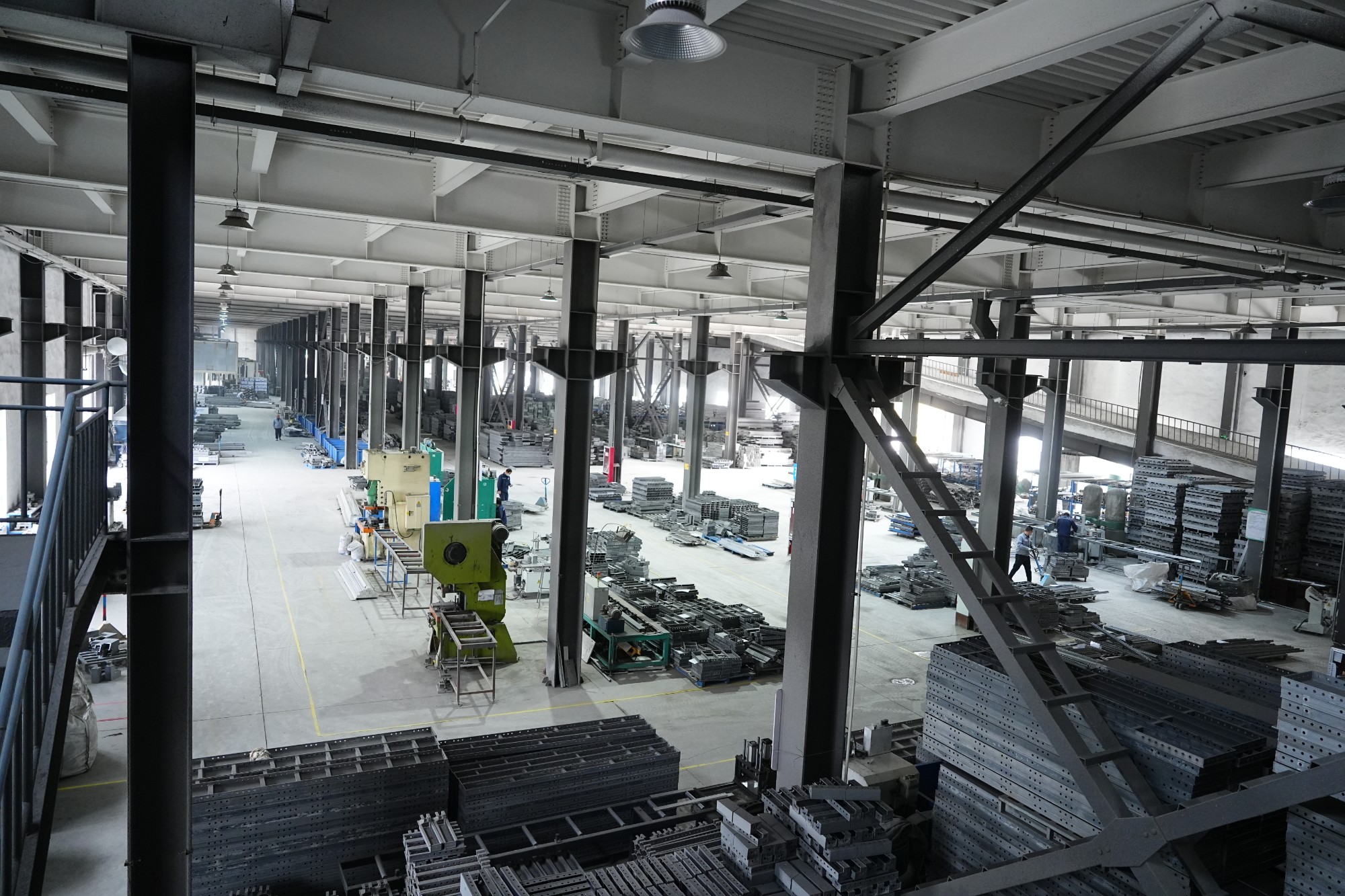
If panel edges are not machined true, joints will not close, and grout will escape. Once grout escapes you have a fin on one side and a void on the other, and you are plastering after all.
We CNC-machine every contact edge to ±0.5 mm and trial-assemble the set before it ships. That tolerance is not marketing precision — it is the difference between a joint that seals and a joint that leaks.
2. Joint sealing discipline
Even perfect panels need the joint treated. The failures we see most often, in order of frequency:
- Pins not fully driven, leaving a 1–2 mm gap that grout finds immediately
- Old concrete residue on the panel edge holding the joint open
- Tie holes not properly plugged, producing a ring stain around every tie
- Corner details assembled in the wrong order, leaving an unsupported edge
None of these is a material problem. All of them are a first-three-cycles training problem, which is exactly what our on-site commissioning is for.
3. Release agent — less than you think
Over-application is far more common than under-application, and far more damaging. Excess release agent pools at the base of the pour, produces dark staining, and interferes with anything applied to the surface afterwards.
What works:
- A thin, even film applied by spray, then wiped — not flooded on
- A chemical release agent formulated for aluminium, not a general mould oil
- Application before reinforcement is placed, so nothing gets contaminated
- Re-cleaning any panel that has sat exposed overnight
4. Pour and vibration discipline
The best formwork in the world will not save a badly placed pour. Fair-faced work needs:
- Layer depth kept to roughly 500 mm — deeper layers trap air at the face
- Poker vibration into the layer below, but never touching the panel face
- Consistent slump between loads — colour variation follows mix variation
- A single continuous pour per element wherever possible
Vibrating against the panel is the most common cause of surface blemish we are asked to explain. It brings fines to the face and leaves a visible band.
Cleaning between cycles
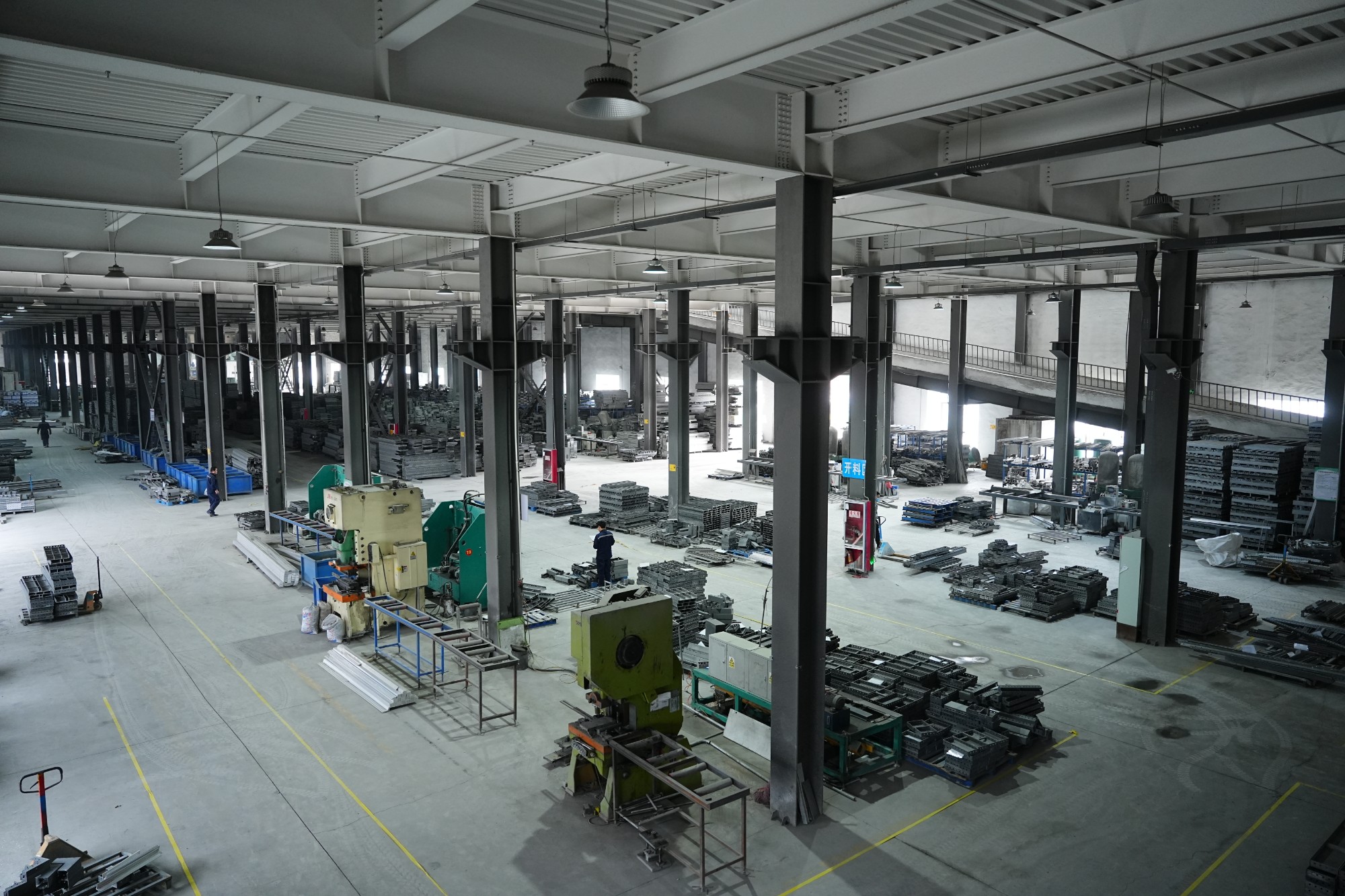
Panel cleaning is the maintenance task that decides whether cycle 200 looks like cycle 20. The routine is unglamorous and non-negotiable:
- Scrape residue while it is still green — cured concrete needs far more aggressive removal
- Use plastic or hardwood scrapers, never steel, on the face plate
- Inspect edges each cycle and dress any burr immediately
- Keep a small repair stock of pins and wedges — worn hardware causes joint gaps
What it is worth
On an 18-storey tower with roughly 9,000 m² of internal wall and soffit area, deleting plastering typically saves in the region of $40,000–55,000 in direct cost, plus around 22 days of programme. The programme saving is usually worth more than the money.
That is the prize. It is also why we would rather spend three days training your crew than ship a set and hope.
AP Building Materials
Shaanxi Hangtou Anping New Materials Technology Co., Ltd. — a one-stop manufacturer of aluminium formwork, steel formwork, scaffolding and support systems for contractors in 30+ markets.
Products
Aluminum FormworkSteel FormworkPlastic FormworkRinglock ScaffoldingSteel SupportShear Wall ReinforcementFormwork AccessoriesLanguage
Contact
info@aluminumformpro.com
+86 29 8888 6666
Shaanxi, China
Privacy Policy Terms & Conditions