One-stop supplier for all kinds of formwork and construction materials.

Aluminium vs Steel vs Timber Formwork: A Practical Comparison
Three systems, three very different jobs. A straight comparison of where each one wins, where each one fails, and how to pick without guessing.

There is no best formwork system. There is only the system that suits the structure, the programme and the budget in front of you. The problem is that most comparisons are written by someone who sells exactly one of the three.
We manufacture aluminium, steel and plastic systems, which puts us in the unusual position of not caring much which one you choose. Here is the honest comparison.
The short version
| Aluminium | Steel | Timber / Plywood | |
|---|---|---|---|
| Best for | Repetitive high-rise floors | Core walls, columns, high load | One-off and irregular shapes |
| Reuse cycles | 300+ | 200+ | 5–15 |
| Weight | ~23 kg/m² | ~55 kg/m² | ~35 kg/m² assembled |
| Crane dependency | Low | High | Medium |
| Concrete finish | Fair-faced | Smooth | Variable |
| Entry cost | High | High | Low |
| Cost per pour | Lowest | Low | Highest |
| Adaptability on site | Low | Low | High |
Aluminium formwork
Aluminium is a production system. It rewards repetition and punishes variation. When the floor plate repeats, a numbered aluminium set turns each floor into an assembly operation rather than a carpentry operation, and cycle times drop accordingly.
Where it wins
- Residential and hotel towers with identical floors
- Projects where a fair-faced finish removes plastering from the programme
- Sites with limited crane availability — most components are hand-handled
- Long programmes where 300 reuses can actually be consumed
Where it fails
- Buildings where every floor is different — panels cannot be re-cut economically
- Very short programmes that cannot absorb the capital
- Heavily loaded transfer structures where deflection limits are severe
Steel formwork
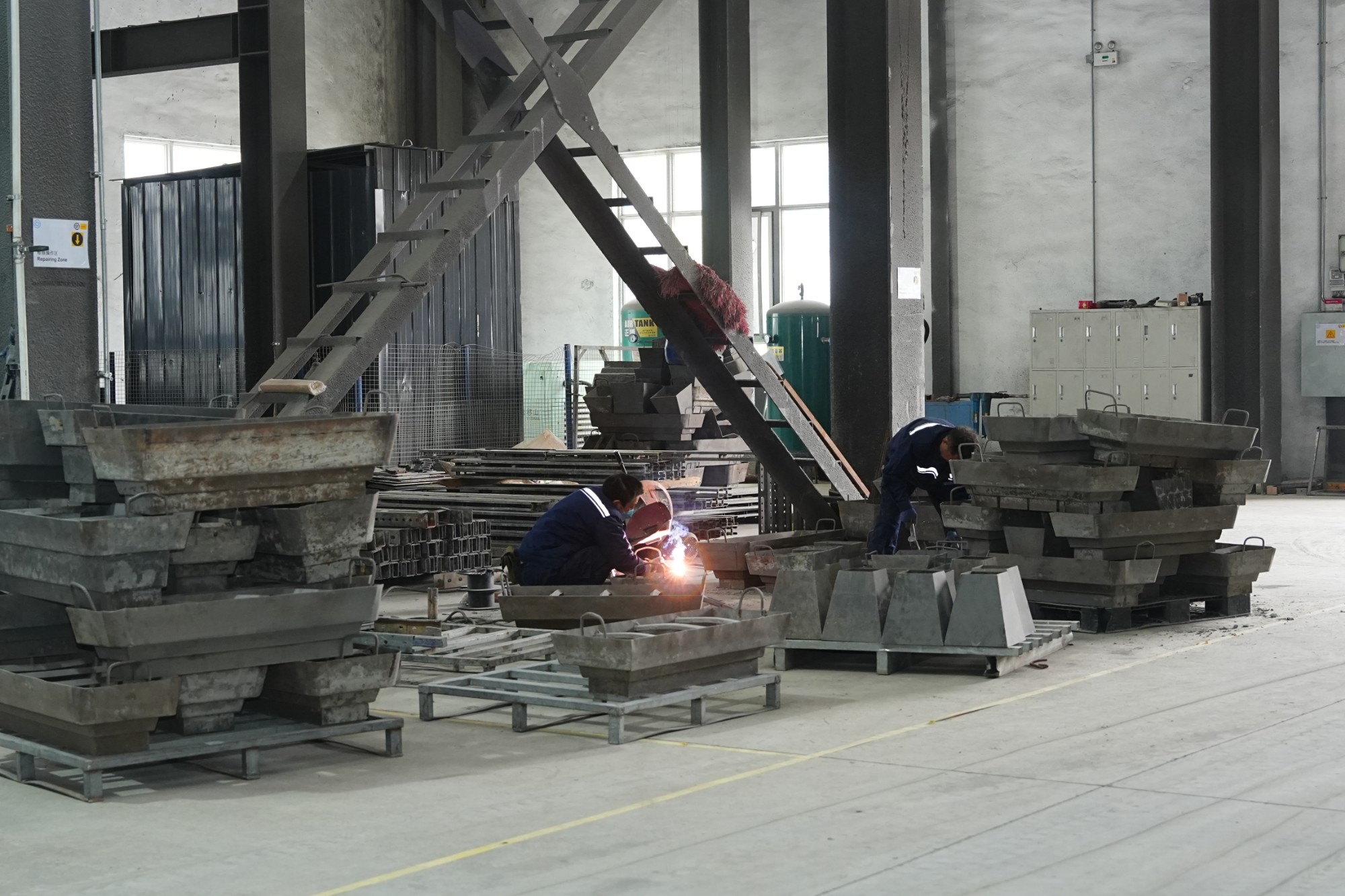
Steel is the rigidity answer. When pour pressures are high or the element must not move at all — core walls, deep beams, heavily reinforced columns — steel holds tolerance where aluminium starts to flex.
Where it wins
- Climbing cores that must stay vertical over hundreds of metres
- Deep transfer beams and large-span soffits
- Column boxes that need to survive repeated crane handling
- Projects where panels can be grouped into crane-liftable table units
Where it fails
- Anywhere crane time is the binding constraint — at 55 kg/m² nothing is hand-handled
- Corrosive or marine environments without proper coating maintenance
- Projects needing frequent panel reconfiguration
In practice the strongest tower packages are hybrids: steel for the core, aluminium for the typical floors, with a shared pin-and-wedge family so the site only stocks one set of accessories. We build both ranges to the same connection standard for exactly this reason.
Timber and plywood
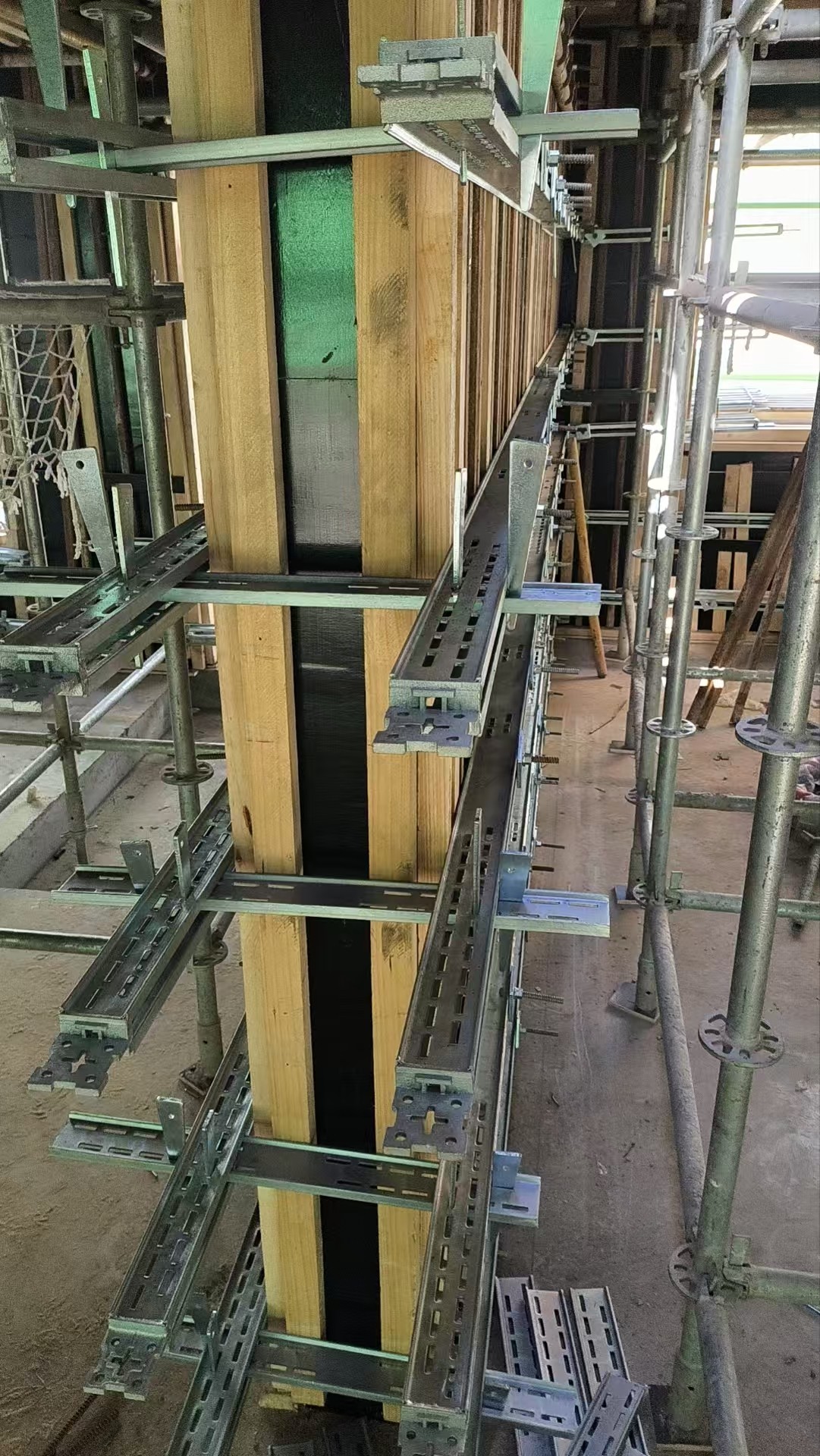
Timber gets dismissed too quickly. It remains the most adaptable material available and the only one a carpenter can modify on site with a saw. For irregular geometry, one-off elements and remedial work, nothing else comes close.
Where it wins
- Irregular, non-repeating geometry
- Small projects where capital cost dominates
- Infill, remedial and making-good work alongside a modular system
- Remote sites where a damaged panel cannot be replaced quickly
Where it fails
- Any repetitive structure — the cost per pour is simply not competitive
- Fair-faced requirements, where grain and joint marks telegraph through
- Wet climates, where swelling and delamination shorten life further
How to choose in five questions
Run these in order. The first one that gives a decisive answer usually settles it.
- How many times does the floor plate repeat? Under 10, look at plastic or rental. Over 15, aluminium is probably right.
- Is a fair-faced finish specified or desirable? If yes, aluminium moves well ahead — plastering is the biggest hidden cost in the comparison.
- What is the crane situation? If crane time is critical, weight per component matters more than anything else on this list.
- Are there heavy transfer elements? If yes, you need steel for those, whatever you use elsewhere.
- Is capital available? If not, rental changes the maths entirely and should be priced alongside purchase.
What we usually recommend
For a repetitive residential tower: aluminium, purchased, with a timber allowance for making good. For a commercial tower with a climbing core: steel core plus aluminium floors, sharing hardware. For low-rise housing on a tight budget: plastic formwork with adjustable props. For anything genuinely one-off: timber, and do not overthink it.
If your project does not fall cleanly into one of those, send us the drawings. We will tell you which of our systems fits — and we will say so if the answer is none of them.
AP Building Materials
Shaanxi Hangtou Anping New Materials Technology Co., Ltd. — a one-stop manufacturer of aluminium formwork, steel formwork, scaffolding and support systems for contractors in 30+ markets.
Products
Aluminum FormworkSteel FormworkPlastic FormworkRinglock ScaffoldingSteel SupportShear Wall ReinforcementFormwork AccessoriesLanguage
Contact
info@aluminumformpro.com
+86 29 8888 6666
Shaanxi, China
Privacy Policy Terms & Conditions