One-stop supplier for all kinds of formwork and construction materials.

Achieving a 4-Day Floor Cycle: What It Actually Takes
A four-day cycle is not a formwork specification — it is a systems outcome. What has to be true about the panel set, the crew, the concrete and the programme.

Every aluminium formwork brochure promises a four-day floor cycle. Very few sites achieve it in the first month, and some never do. The formwork is rarely the reason.
A four-day cycle is a systems outcome. Five things have to be true simultaneously, and the panel set is only one of them.
What a four-day cycle actually looks like
| Day | Activity | Critical dependency |
|---|---|---|
| Day 1 | Strike previous floor, clean and lift panels | Concrete strength at strike |
| Day 2 | Set wall formwork, install ties and walers | Panel numbering and crew familiarity |
| Day 3 | Set slab formwork, place reinforcement, MEP inlets | Rebar and MEP coordination |
| Day 4 | Inspect, pour, initial cure | Concrete supply and pour rate |
Notice that only two of the eight dependencies are formwork-related. This is the part that catches people out.
1. The panel set must be genuinely modular
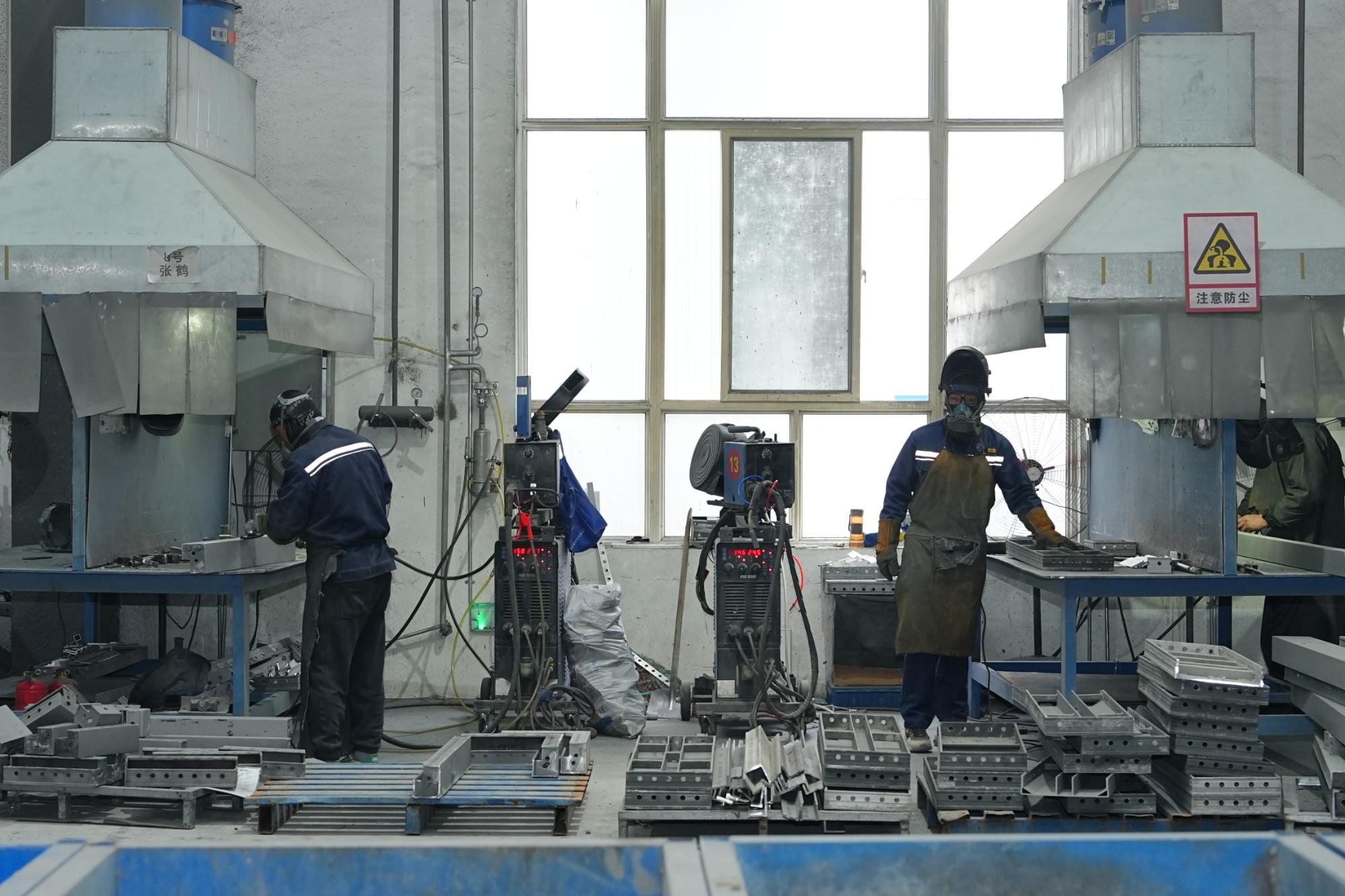
Modular means every panel carries a number that matches a drawing, and every connection uses the same pin and wedge. If your crew has to search for the right panel, or swap between two accessory families, you have lost the cycle before you start.
We trial-assemble every set in our workshop before shipping precisely so that the first site assembly is not the first assembly. Problems found in the workshop cost hours; the same problems found on the fourth floor cost days.
2. The crew has to climb the learning curve
Nobody hits four days on cycle one. Across our projects the pattern is remarkably consistent:
- Cycles 1–2: 7–8 days. The crew is learning the numbering system.
- Cycles 3–4: 5–6 days. Sequence is understood, handling is still slow.
- Cycle 5 onward: 4 days, sustained.
This is why we put an engineer on site for the first three cycles. The cost of that support is recovered several times over by reaching the target cycle two weeks earlier.
3. Concrete strength has to allow an early strike
The cycle lives or dies on when you can strike. Vertical elements can usually come off at 8–12 hours; slab soffits need enough strength to carry themselves plus construction load.
Practical levers, in order of usefulness:
- Design the mix for early strength rather than only 28-day strength
- Keep back-propping in place so soffit panels can be released early
- Use maturity monitoring instead of guessing from cube results
- Protect the pour overnight in cold weather — temperature is the biggest variable
4. Rebar and MEP must not block the formwork
On a four-day cycle the reinforcement and MEP inlets have to be ready before the slab formwork is complete, not after. This is a coordination problem, not a formwork problem, and it is the single most common reason we see cycles slip to five or six days.
Prefabricated rebar cages and pre-positioned MEP sleeves are worth the extra cost on any building over about 15 floors.
5. Back-propping must be designed, not improvised
Early striking transfers load to the floors below. If back-propping is left to the site to figure out, one of two things happens: too little, and you crack the young slab; too much, and props are in the way of the following trades.
We supply back-propping layouts with the panel drawings, showing how many levels stay propped and where. It is a small piece of engineering that protects both the structure and the programme.
Realistic expectations by structure type
| Structure | Achievable cycle | Main constraint |
|---|---|---|
| Repetitive shear-wall residential | 4 days | Concrete strength at strike |
| Commercial tower with climbing core | 5 days | Core progression ahead of slab |
| Mixed-use with varying plates | 6–7 days | Panel reconfiguration between floors |
| Podium and transfer levels | 10–14 days | Shoring and deep beam formwork |
If someone promises you four days on a building with a changing floor plate, ask them to show you the panel layout for floors 7 and 8 side by side.
The honest summary
Buy the right formwork and you have bought a necessary condition, not a sufficient one. The projects that hit four days consistently are the ones that treated the cycle as a programme design problem from the start — mix design, rebar prefabrication, MEP coordination and crew training planned together, months before the first panel arrived.
We are happy to sit in that planning conversation. It is usually where the cycle is won.
AP Building Materials
Shaanxi Hangtou Anping New Materials Technology Co., Ltd. — a one-stop manufacturer of aluminium formwork, steel formwork, scaffolding and support systems for contractors in 30+ markets.
Products
Aluminum FormworkSteel FormworkPlastic FormworkRinglock ScaffoldingSteel SupportShear Wall ReinforcementFormwork AccessoriesLanguage
Contact
info@aluminumformpro.com
+86 29 8888 6666
Shaanxi, China
Privacy Policy Terms & Conditions